Ingredient glossary
The herbs behind our formulas
Every KBA & Co formula starts with a lead herb that has real science behind it. Here is what each one is, what the research actually says, and which products it lives in. The research, not the folklore.
Calendula Calendula officinalis A bright orange flower rich in triterpenoids, flavonoids, and carotenoids. The faradiol esters in calendula are the compounds most studied for calming the look of red, irritated skin. Read the research → Cayenne (Capsaicin) Capsicum annuum The warming chili pepper whose active compound, capsaicin, is one of the best-studied botanicals for sore, aching muscles and joints when applied topically. Read the research → Colloidal Oatmeal Avena sativa Finely milled oats, recognized for calming dry, itchy, irritated skin. Its avenanthramides and beta-glucan are the constituents behind its soothing, barrier-supporting reputation. Read the research → Holy Basil (Tulsi) Ocimum tenuiflorum A revered adaptogenic herb in Ayurveda, studied for how the body responds to everyday stress. Its eugenol and ursolic acid are among the active compounds. Read the research → Jojoba Simmondsia chinensis Technically a liquid wax rather than an oil, jojoba closely mirrors the skin’s own sebum — which is why it absorbs cleanly and is the base of our face and scalp serums. Read the research → Lemon Balm Melissa officinalis A lemon-scented member of the mint family traditionally used to wind down. Its rosmarinic acid and volatile oils are the constituents most studied for calm and sleep. Read the research → Lemon Eucalyptus Corymbia citriodora A tall Australian gum tree whose leaves yield a bright, citrusy oil. Its best studied compound is PMD, short for para-menthane-3,8-diol. Read the research → Mullein Verbascum thapsus A soft-leaved roadside plant long used for the respiratory tract. Its saponins and mucilage are the constituents traditionally valued for a soothing, demulcent quality. Read the research → Spirulina Arthrospira platensis A nutrient-dense blue-green algae studied topically for skin, thanks to its antioxidant pigments and proteins. Read the research → Thyme (Thymol) Thymus vulgaris A kitchen herb whose essential oil is dominated by thymol, a compound studied for respiratory comfort and its antimicrobial behavior in the lab. Read the research → Turmeric (Curcumin) Curcuma longa The golden root whose pigment, curcumin, is among the most-researched plant compounds for the body’s normal inflammatory response and joint comfort. Read the research →
 120+ more herbs, sorted by where they grow Field Guide to Common Medicinal Herbs Two indexes, one by herb and one by what you're looking it up for · $44
 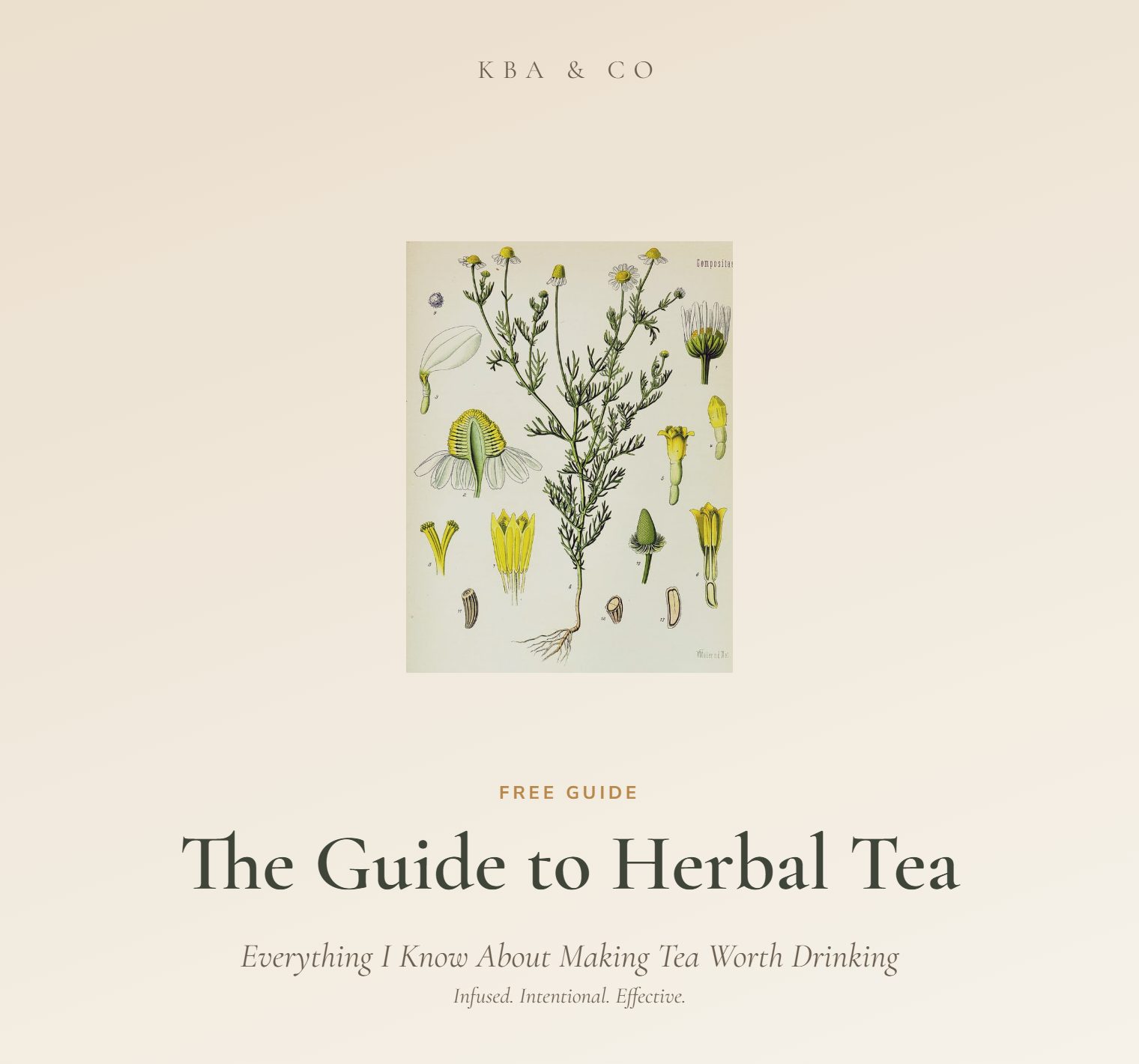 Free The Guide to Herbal Tea 39 blends with the ratios, and which herbs to steep and which to simmer
 Looking for something specific? Try the Find your remedy quiz or browse the full shop.